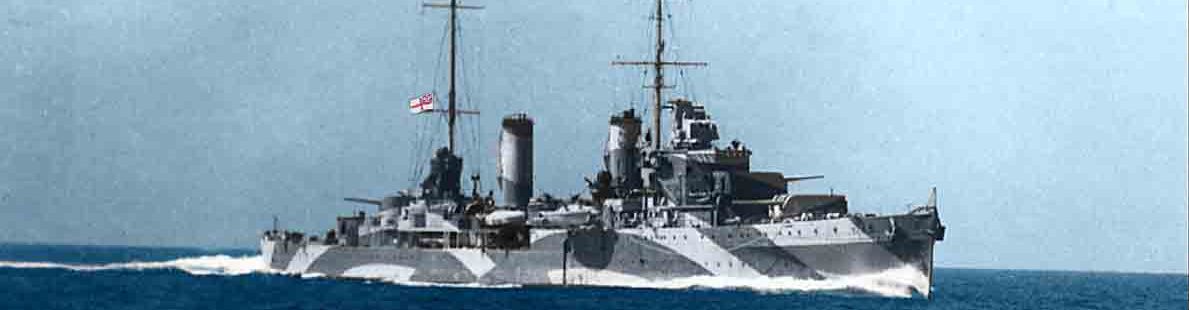

Many of the crew lost in the sinking of H.M.A.S. PERTH were in the water when the third and fourth torpedoes hit and were killed by the explosions. Those who survived were swept around St. Nicholas Point on the northwest tip of Java by the strong current either swimming, clinging to floating debris, or rafts and damaged lifeboats. They then entered the Sunda Strait which separates Java and Sumatra.

Some managed to overcome the strong current and get ashore on Toppers or Sangiang Islands while others were swept through the Strait and out into the Indian Ocean and never seen again.
A Japanese destroyer also rescued some survivors who were in a lifeboat in the Strait. The unidentified destroyer stood by from 0900 to Noon while the lifeboat made numerous trips, collecting 188 survivors and bringing them back to the ship. These men were then transferred to two other destroyers and conveyed to Bantam Bay where they were placed on the transport SOMEDONG MARU.
(Report for Commonwealth Naval Board 23 Sep 1945)
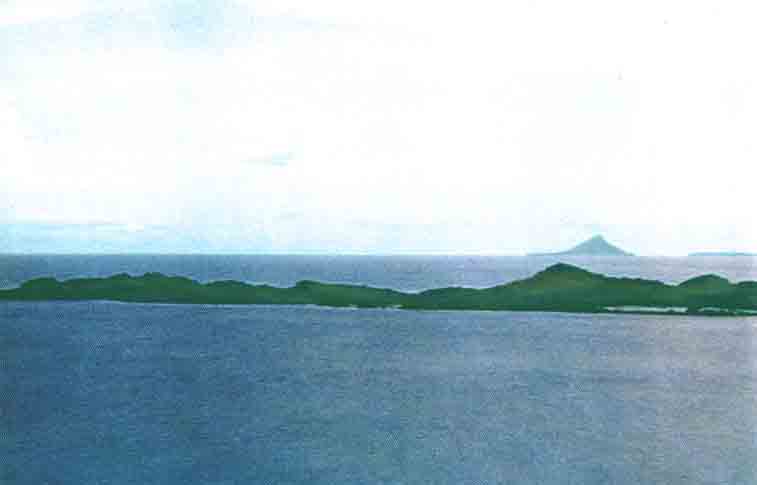
Those on Toppers and Sangiang repaired boats or constructed rafts. One boat managed to sail to the southern coast of Sumatra where the crew was captured and spent the rest of the war in a POW camp at Palembang. Another boat sailed across the strait to Java and another through the strait and down the south coast to Tjiltjap. Both of these boat parties were captured.
Some of those who made it ashore to Java died of wounds. ERA D.A.Smith was killed by hostile natives on the 6th Mar on the road between Anjer and Labuan. Four other crewmen were also wounded in similar attacks*. Most of those captured on Java ended up in Selarang Gaol until April 1942 when they were transferred to “Bicycle Camp” in Batavia. A few were sent directly to Japan to work in the mines.
*Nat. Archives File: MP1185/9 – 567/201/82
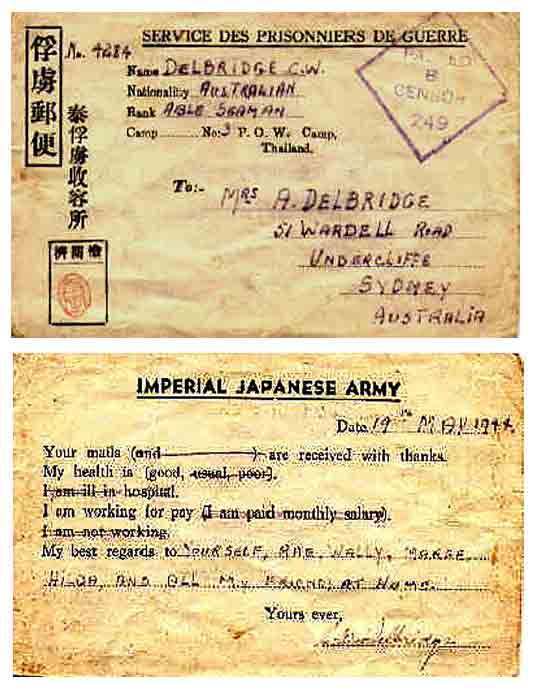
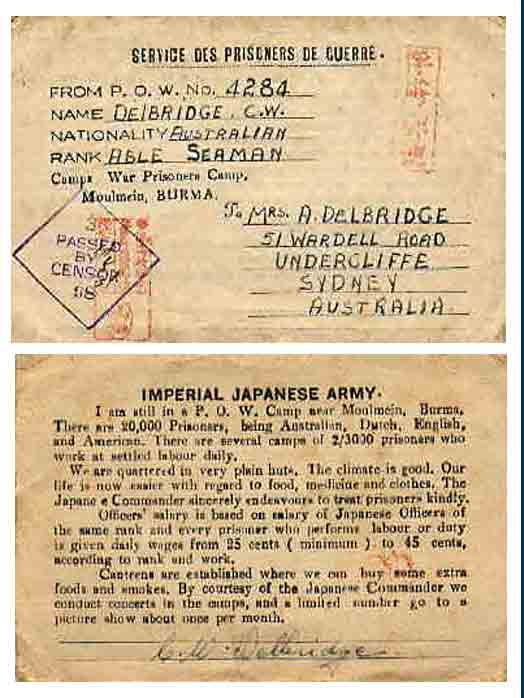
On 8th October 1942 most of the PERTH survivors, accompanied Lt Col John Williams C.O. of the 2/2nd Pioneers (Williams Force), left Java for Burma. This group included men of the 2/2nd Pioneers and comprised 884 men.
They arrived at Thanbyuzayat, Burma, and became part of 3 Group, moved to Tanyin 35 kilo camp first. Camp Commandant Lt Yamada was one of the best and tolerant Japanese Officers on the Railway who respected Col Williams, unfortunately he was later moved. The Medical Officer was Ear Nose & Throat Specialist Lt Col Eadie. In March 1943 with Anderson Force, they moved back to the 26 Kilo camp Kunknikway, here they were to come under the control of the unpredictable drunkard Lt Naito. On April 4th they commenced the work of laying the rails & sleepers through to where the two ends joined on 17 October 1943 known as No 1 Mobile Force. It should be noted that in all Australian camps on the Burma end of the Railway, Officers accompanied the men on the work parties and actively intervened to protect the men from punishment, often taking the bashing themselves. This was very much the rule in Williams and Anderson Forces where the Officers had won the respect of the men in action in Syria, Java & Malaya, Col Anderson won his Victoria Cross in the Malaya fighting.
In January 1943 another group of PERTH survivors left Java for Burma. Near Moulmein their convoy was attacked by Liberator bombers of the 10th U.S.A.A.F. The NICHIMEI MARU was sunk and MOJI MARU was hit and two PERTH crewmen, George McCredie and Rob Smith, died later from injuries received. This group of survivors commenced work at the 18 Kilo Camp.
By September 1944 the Japanese were starting to send the P.O.Ws by ship to Japan to work in the mines. Unfortunately many of theses ships were sunk by U.S. submarines who were unaware that they carried prisoners Many P.O.W.s were killed and on 12th Sept 1944, 33 PERTH crew were lost in the sinking of the RAKUYO MARU after it was attacked by U.S. submarines. As luck would have it four PERTH survivors were picked up by the U.S. submarine QUEENFISH and returned to Australia.
Link to USS warships
USS BARB
USS Pampanito
USS Queensfish
USS Sealion
Pampanito resucing survivors
Rakuyo Maru
The first PERTH death on the Burma Railway occurred in March 1943. In all 58 survivors died while constructing the railway. The biggest loss was at 55 Kilo camp where 13 men died.

PERTH survivors H.A.Kelly and G.B.Morriss perished on the notorious Sandakan Death March. AB Morriss is buried in the Labuan War Cemetery
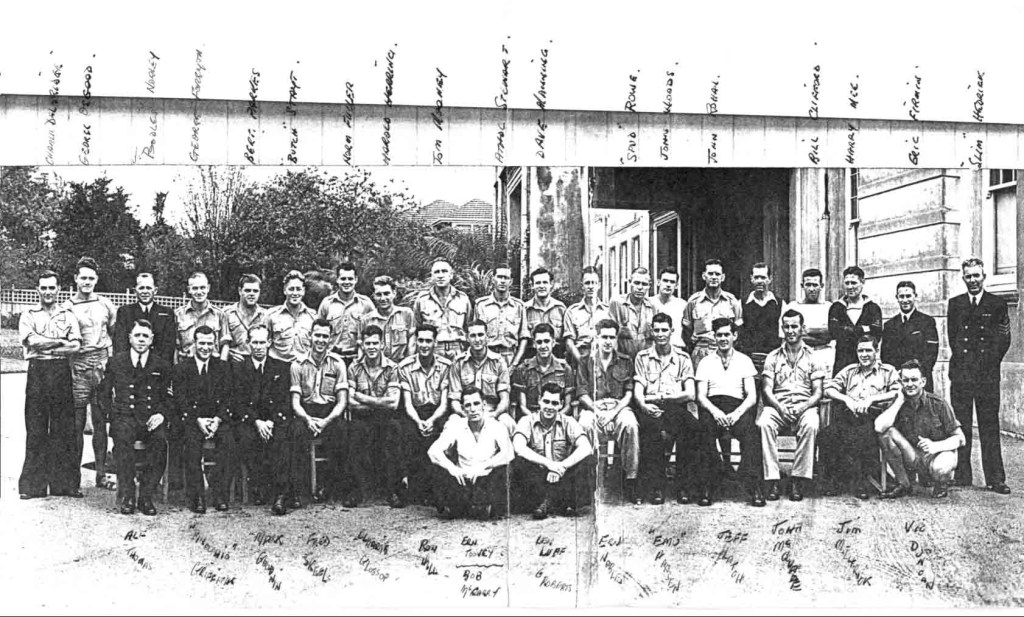
( My uncle, Charles Delbridge, standing on far left with arms folded )
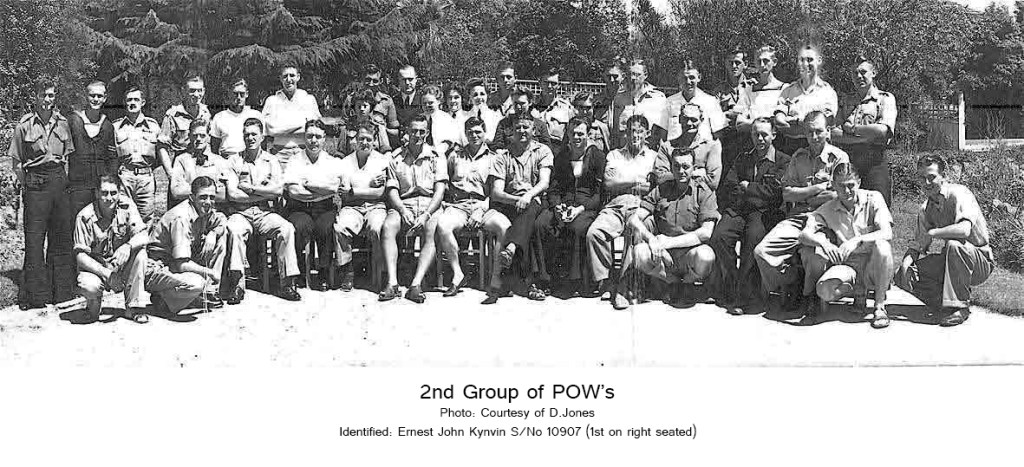
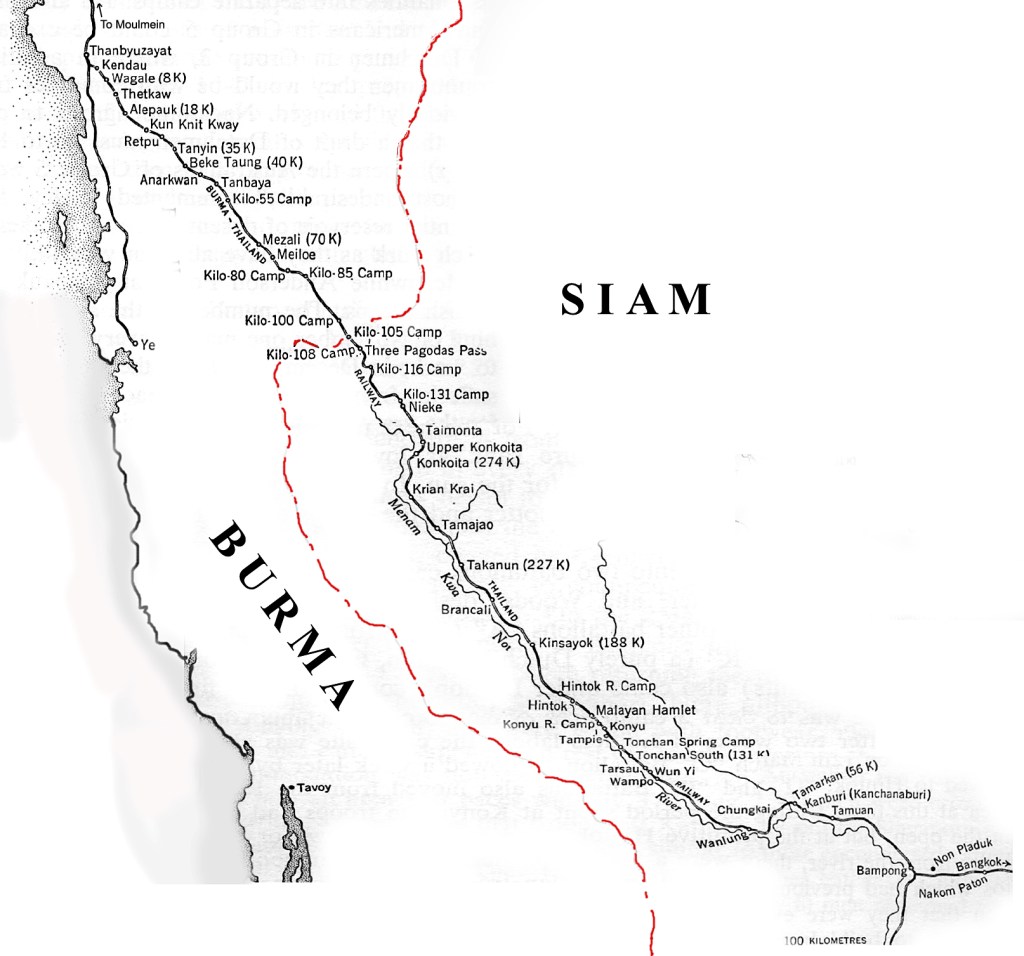
List of Camps on Burma – Siam Railway link to page pow-burmarailcamps.htm
Thanks to Neil and John MacPherson for allowing the use of their list.
 HMAS Perth 1
